
How to Start Journaling for Anxiety (Step-by-Step Guide)
Introduction
Journaling is one of the most effective tools for managing anxiety—but only when done correctly.
Many people start journaling hoping to feel better, but end up:
- Overthinking more
- Feeling stuck
- Not knowing what to write
This guide will show you a simple, structured method to use journaling for anxiety relief.
Why Journaling Helps with Anxiety
Anxiety often comes from:
- Unprocessed thoughts
- Unidentified emotions
- Repetitive mental loops
Journaling helps by:
- Externalizing thoughts
- Creating clarity
- Breaking mental patterns
Step-by-Step Journaling Method for Anxiety
Step 1: Brain Dump
Write everything that’s on your mind without filtering.
Don’t worry about grammar or structure.
Goal: Release mental clutter
Step 2: Identify the Emotion
Ask yourself:
- What am I feeling right now?
Examples:
- Anxiety
- Fear
- Frustration
- Overwhelm
Naming emotions reduces their intensity
Step 3: Identify the Trigger
Ask:
- What caused this feeling?
Look for:
- Situations
- Conversations
- Thoughts
This builds awareness
Step 4: Challenge the Thought
Ask:
- Is this thought 100% true?
- Is there another way to look at it?
This reduces cognitive distortions
Step 5: Plan a Small Action
End with:
- One small step you can take
Examples:
- Send that message
- Take a break
- Plan your day
This restores control
Why Most People Struggle with This
This process is effective but difficult to follow consistently.
Common challenges:
- Not knowing what to write
- Losing track of steps
- Feeling overwhelmed
How Structured Journals Help
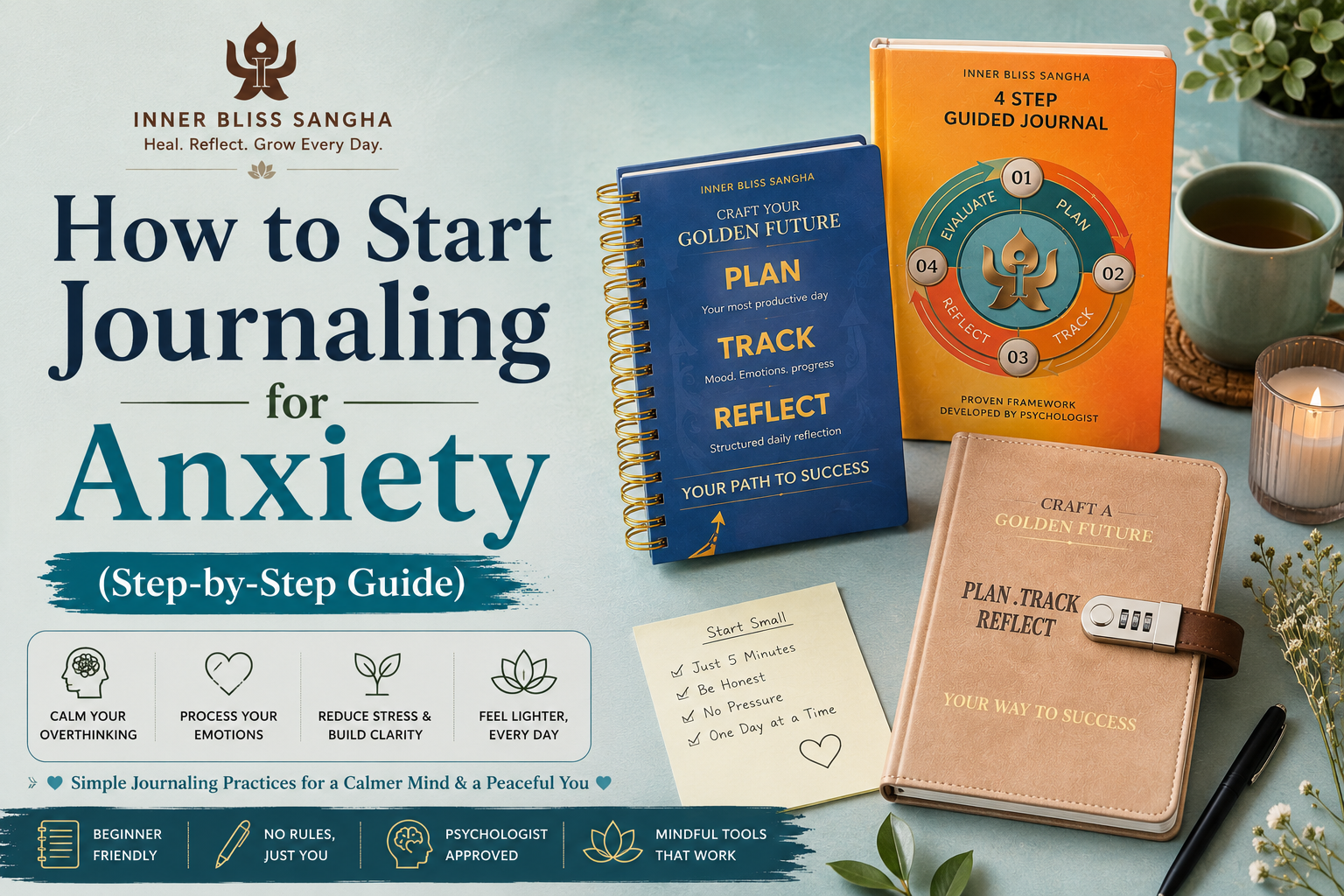
Using a structured journal like Inner Bliss Sangha simplifies this process by:
- Providing guided prompts for each step
- Organizing thoughts systematically
- Making journaling feel manageable
Instead of thinking “what should I write?”
You simply follow the flow.
Final Thoughts
Journaling for anxiety is not about writing more.
It’s about writing with direction and intention.
When done correctly, it can help you:
- Reduce overthinking
- Gain clarity
- Feel more in control
Start small, stay consistent, and use a system that supports you.